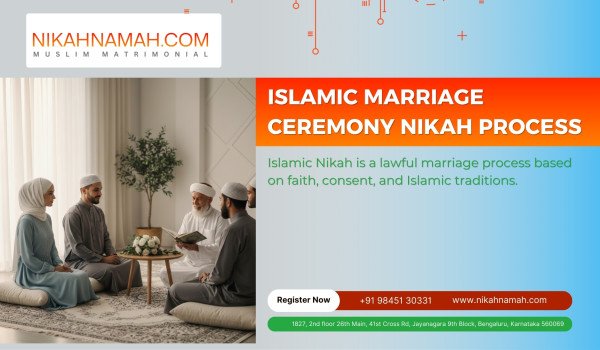
The Islamic marriage ceremony Nikah process is one of the most sacred and significant moments in a Muslim's life. Marriage in Islam is not merely a social contract but a spiritual covenant between two individuals, their families, and Allah. Understanding the Nikah process and the Islamic marriage ceremony is essential for anyone preparing to embark on this sacred journey. This comprehensive guide explores every aspect of the Islamic marriage ceremony, from its spiritual significance to the detailed steps of the Nikah process.
Understanding Nikah: The Islamic Marriage Ceremony
What is Nikah?
The Islamic marriage ceremony Nikah is the formal contract between two individuals entering into a sacred marital bond. The word "Nikah" literally means "to come together" or "to unite." However, the Islamic marriage ceremony is far more profound than its linguistic meaning—it represents a legal, spiritual, and social union sanctioned by Islam.
In Islamic teaching, the Nikah process is not merely a ceremonial event but a binding contract with specific rights, responsibilities, and implications. The Prophet Muhammad (peace be upon him) stated that marriage is half of faith, emphasizing the spiritual significance of the Islamic marriage ceremony Nikah.
The Spiritual Significance of Islamic Marriage Ceremony
The Islamic marriage ceremony is deeply rooted in Islamic spirituality:
Divine Sanction: Islam views the Nikah process as a way to follow the Sunnah (teachings and practices of the Prophet Muhammad).
Spiritual Completion: Marriage is considered a means of completing one's faith and achieving spiritual balance.
Family Foundation: The Islamic marriage ceremony establishes the foundation for a righteous family unit that contributes to Islamic society.
Moral Protection: The Nikah process provides a framework for fulfilling human needs within Islamic boundaries.
Divine Blessing: The Islamic marriage ceremony is believed to be blessed by Allah when conducted with proper intent and procedure.
Essential Elements of the Nikah Process
The Islamic marriage ceremony Nikah process has specific requirements that must be met for the marriage to be valid in Islamic law.
1. Ijab (Offer)
The ijab is the formal offer of marriage. In the traditional Nikah process:
- The bride's guardian (wali) makes the offer on her behalf
- The offer is made directly to the groom or his representative
- The offer must be clear and unambiguous
- The offer should include terms of the mahr (marriage gift)
- In modern Islamic marriage ceremony contexts, the bride may make the offer directly if she's an adult
2. Qabul (Acceptance)
The qabul is the groom's acceptance of the offer. In the Islamic marriage ceremony Nikah:
- The groom accepts the offer clearly and unambiguously
- The acceptance must match the terms of the offer
- The acceptance should occur during the same session as the offer
- If any terms are changed, it becomes a counter-offer
- In the modern Nikah process, both parties explicitly express consent
3. Mahr (Marriage Gift)
The mahr is a mandatory gift from the groom to the bride in the Islamic marriage ceremony:
What is Mahr?
Mahr can be:
- Monetary (gold, cash, or other valuable items)
- Non-monetary (Islamic knowledge, property, or agreed-upon valuable items)
- Specified or customary amounts
- Anything of value mutually agreed upon
Significance of Mahr in the Nikah Process
In the Islamic marriage ceremony Nikah process, the mahr serves several purposes:
- Demonstrates the groom's commitment and respect to the bride
- Provides financial security for the bride
- Becomes the exclusive property of the bride
- Cannot be reclaimed by the groom in any circumstance
- Offers protection in case of divorce
- Represents the bride's dignity and value in Islam
4. Witnesses
The Islamic marriage ceremony Nikah process requires witnesses:
Requirements for Witnesses
In the Nikah process, witnesses must be:
- Sane and mentally competent adults
- Muslim (according to most Islamic schools)
- Free from coercion or pressure
- Present during the ijab and qabul
- Able to understand the implications of what they're witnessing
- Trustworthy individuals
Role of Witnesses
Witnesses in the Islamic marriage ceremony serve to:
- Validate the contract between the parties
- Provide evidence of the marriage
- Protect both bride and groom
- Ensure transparency in the Nikah process
- Establish the marriage as a public commitment
5. Mutual Consent (Ijab wa Qabul)
The Islamic marriage ceremony Nikah process absolutely requires free and informed consent from both parties:
- The bride must freely consent without coercion
- The groom must freely consent without pressure
- Consent must be based on full understanding
- No one can force either party into the Nikah process
- Both parties must enter the Islamic marriage ceremony with clear intention
The Bride's Guardian (Wali) in the Nikah Process
The bride's guardian plays an important role in the Islamic marriage ceremony Nikah process:
Who Can Be a Wali?
In the Islamic marriage ceremony, the wali is typically:
- The bride's father (preferred if present and willing)
- Another male relative (grandfather, uncle, brother)
- A guardian appointed by the bride or appointed through Islamic court
- A trusted community member in absence of relatives
Wali's Responsibilities in the Nikah Process
The wali's role in the Islamic marriage ceremony Nikah includes:
- Ensuring the bride enters the Nikah process freely and willingly
- Making the ijab (offer) on behalf of the bride
- Approving the mahr amount
- Providing guidance to the bride
- Witnessing the Islamic marriage ceremony
- Ensuring the groom is suitable for the bride
Modern Considerations for the Wali
In contemporary Islamic marriage ceremony Nikah process contexts:
- Adult brides may have input in choosing their wali
- The wali must respect the bride's wishes and consent
- Some schools allow women to act as representatives
- The principle remains: protecting the bride's interests while respecting her autonomy
Step-by-Step: The Islamic Marriage Ceremony Nikah Process
Pre-Nikah Preparation (Days/Weeks Before)
Step 1: Selection of Imam or Islamic Scholar
Before the Islamic marriage ceremony Nikah, the couple should:
- Choose a qualified imam or Islamic scholar to conduct the Nikah process
- Discuss the ceremony details with the imam
- Understand Islamic requirements and recommendations
- Clarify any questions about the Nikah process
Step 2: Choosing Witnesses
For the Islamic marriage ceremony:
- Select two trustworthy Muslim witnesses
- Ensure witnesses understand their role
- Verify they will be present for the Nikah process
- Brief witnesses on what to expect
Step 3: Mahr Discussion and Agreement
Essential to the Nikah process:
- Bride and groom (with family consultation) agree on mahr
- Discuss payment method and timing
- Document the mahr agreement
- Ensure both parties understand the arrangement
Step 4: Family Discussions
Before the Islamic marriage ceremony Nikah:
- Both families clarify expectations
- Discuss living arrangements and responsibilities
- Address financial matters
- Resolve any outstanding concerns
- Seek blessing from parents and elders
Step 5: Spiritual Preparation
For the Islamic marriage ceremony:
- Increase prayer and Quran recitation
- Seek Islamic knowledge about marriage
- Mental preparation for this significant commitment
- Emotional readiness for the transition
The Nikah Ceremony (Day of Event)
Step 1: Gathering and Opening
The Islamic marriage ceremony Nikah process begins with:
- Guests and families assembling at the venue
- Imam welcoming attendees
- Brief explanation of the Nikah process proceedings
- Opening with Quranic recitations and Islamic teachings
Step 2: The Khutbah (Sermon)
The imam delivers a sermon during the Islamic marriage ceremony:
- Discusses the significance of the Nikah process in Islam
- Reminds of marital rights and responsibilities
- Emphasizes kindness and compassion in marriage
- Provides spiritual guidance for the couple
- Invokes divine blessings on the union
Step 3: The Ijab (Offer)
The crucial moment in the Nikah process:
- The bride's wali addresses the groom
- Makes the formal offer: "I offer you my daughter in marriage..."
- Specifies the mahr amount
- Waits for the groom's acceptance
Step 4: The Qabul (Acceptance)
The groom's acceptance completes the Islamic marriage ceremony:
- The groom clearly accepts the offer
- States: "I accept your offer and marry your daughter..."
- Confirms the mahr amount
- Expresses willingness to take on marital responsibilities
Step 5: Formal Announcement
After the ijab and qabul:
- The imam announces the marriage is complete
- The couple is declared husband and wife in Islam
- Witnesses affirm what they've witnessed
- Family members and guests congratulate the couple
Step 6: Signing of Documents
Following the Islamic marriage ceremony Nikah:
- Nikah certificate is signed by the couple, wali, witnesses, and imam
- In jurisdictions requiring it, civil registration occurs
- Important documents are completed and distributed
Post-Nikah Celebration
The Reception (Walima)
After the Islamic marriage ceremony Nikah:
- The groom's family traditionally hosts a reception
- Festive meal with family and guests
- Celebration of the new marriage
- Music, dancing, and entertainment (where culturally appropriate)
- Gift-giving and blessings from attendees
Different Cultural Expressions of the Nikah Process
While the core requirements of the Islamic marriage ceremony Nikah process remain constant, different cultures have unique traditions:
Arab Traditions in the Nikah Process
In Arab cultures, the Islamic marriage ceremony often includes:
- Formal family negotiations before the Nikah process
- Henna celebration (mehndi) for the bride
- Separate celebrations for men and women
- Traditional music and dance
- Elaborate wedding feasts
- Multiple celebration days
South Asian Traditions in the Islamic Marriage Ceremony
The Islamic marriage ceremony Nikah process in South Asian contexts typically features:
- Mehndi (henna) application celebration
- Baraat (groom's procession) before the Nikah process
- Separate nikah ceremony and walima reception
- Extensive family involvement
- Multiple celebration days (2-3 days typically)
- Traditional clothing and jewelry
- Cultural music and dances
Southeast Asian Traditions in Nikah
The Islamic marriage ceremony Nikah process in Southeast Asia often includes:
- Bersanding (couple sitting together) ceremony
- Combined nikah and reception celebrations
- Islamic teachings integrated with cultural elements
- Community involvement in the Nikah process
- Traditional Malay, Indonesian, or Malaysian customs
Western Muslim Traditions in the Islamic Marriage Ceremony
Modern Islamic marriage ceremony Nikah process in Western contexts often features:
- Simplified ceremonies respecting Islamic requirements
- Combined civil and religious celebrations
- Focus on authenticity and Islamic adherence
- Incorporation of both partners' backgrounds
- Professional event planning for the Nikah process
Rights and Responsibilities in the Nikah Process
Understanding the implications of the Islamic marriage ceremony Nikah is crucial:
Husband's Rights in the Islamic Marriage Ceremony
After the Nikah process is complete, the husband has rights:
- Conjugal relations with his wife
- Obedience in matters that don't contradict Islamic law
- Management of household affairs
- Financial benefit from wife's work (by her choice)
- Privacy and respect
Husband's Responsibilities in the Islamic Marriage Ceremony
The Nikah process also establishes the husband's duties:
- Provide financially for the wife and household
- Treat the wife with kindness and compassion
- Maintain the marriage relationship respectfully
- Respect her dignity and autonomy
- Support her religious practice
- Cooperate in household management
Wife's Rights in the Islamic Marriage Ceremony
The Islamic marriage ceremony Nikah process grants the wife significant rights:
- Receive mahr as exclusive property
- Financial support and maintenance
- Kind treatment and respect
- Right to her own property and earnings
- Right to refuse marital relations unreasonably
- Right to divorce (khul) if unhappy
- Right to maintain family relationships
- Right to pursue education and career
Wife's Responsibilities After Nikah
The Islamic marriage ceremony also establishes the wife's responsibilities:
- Manage household wisely and efficiently
- Respect and honor her husband
- Maintain marital relations reasonably
- Care for children and family
- Guard family honor and privacy
- Support husband's reasonable endeavors
Legal and Religious Documentation of the Nikah Process
The Islamic marriage ceremony Nikah requires proper documentation:
Islamic Nikah Certificate
Following the Nikah process, an Islamic nikah certificate should include:
- Names of bride and groom
- Names of witnesses
- Name and signature of the imam
- Date and location of the Islamic marriage ceremony
- Mahr details
- Signatures of all parties
Civil Registration
In many jurisdictions, the Islamic marriage ceremony must also be registered civilly:
- Civil marriage certificate from government authority
- Legal recognition of the marriage
- Protection of spousal rights under law
- Importance for inheritance, pensions, and custody
Storage of Nikah Documents
Documents from the Nikah process should be:
- Stored in secure locations
- Multiple copies maintained
- Easily accessible when needed
- Protected from loss or damage
- Kept safely throughout married life
Common Questions About the Islamic Marriage Ceremony Nikah Process
Q: Can the bride speak during the Nikah ceremony?
A: Yes, absolutely. In the modern Islamic marriage ceremony Nikah process, the bride's explicit consent and voice are crucial. Many contemporary ceremonies include the bride's verbal acceptance of the groom.
Q: What if the bride is not present at the Nikah ceremony?
A: In traditional Islamic marriage ceremony, the bride can authorize a representative (usually her wali). However, modern practice increasingly requires the bride's presence to emphasize her consent during the Nikah process.
Q: How long does the Nikah ceremony last?
A: The actual Islamic marriage ceremony Nikah typically lasts 15-30 minutes. However, the entire Nikah process including preparation, ceremony, and initial celebration may extend several hours.
Q: Can non-Muslims attend the Nikah ceremony?
A: Yes, non-Muslim family members and friends can attend the Islamic marriage ceremony Nikah. The ceremony itself is open to observers, though witnesses must be Muslim.
Q: Is mahr required in the Nikah process?
A: Yes, mahr is mandatory in the Islamic marriage ceremony Nikah process according to Islamic law. However, the amount is flexible and negotiable.
Q: Can the Nikah be done without a traditional imam?
A: While an imam is recommended for the Islamic marriage ceremony Nikah, any knowledgeable Muslim can conduct the Nikah process provided they understand Islamic requirements. However, having a trained imam ensures proper execution.
Q: What if one party disagrees with the mahr during the Nikah?
A: In the Islamic marriage ceremony Nikah process, the mahr must be agreed upon before ijab and qabul. Disagreement should be resolved in pre-nikah discussions, not during the ceremony.
Q: Can a woman conduct the Nikah ceremony?
A: According to most Islamic schools, women cannot make the ijab (offer) on behalf of the bride in the traditional Nikah process. The wali typically is male, though the imam conducting the ceremony can be male or female.
Q: Is civil marriage necessary alongside the Nikah?
A: Islamic law doesn't require civil registration for the Nikah process to be valid. However, in most modern jurisdictions, civil registration is legally necessary for the marriage to be recognized by the state.
Q: Can the Nikah ceremony be recorded?
A: Yes, the Islamic marriage ceremony can be recorded for documentation and family viewing. Many modern couples document their Nikah process through video and photography.
Preparing for Your Islamic Marriage Ceremony Nikah
For the Bride
In preparation for the Islamic marriage ceremony Nikah:
- Understand Islamic rights and responsibilities
- Discuss expectations with family and future spouse
- Choose bridal attire that reflects Islamic modesty
- Prepare spiritually through prayer and Quran
- Address any concerns or anxieties
- Plan celebration details with family
For the Groom
Before the Nikah process:
- Understand marital responsibilities and rights
- Prepare spiritually and emotionally
- Discuss expectations with the bride's family
- Finalize mahr arrangement
- Plan the reception and celebration
- Express commitment and readiness
For the Families
In preparation for the Islamic marriage ceremony Nikah:
- Support the couple emotionally
- Facilitate family meetings and discussions
- Ensure proper Islamic guidance
- Arrange venue and logistics
- Invite appropriate guests
- Celebrate the union joyfully
The Significance of the Nikah Process in Modern Times
The Islamic marriage ceremony Nikah remains as significant today as historically:
Spiritual Importance
The Nikah process continues to be:
- A sacred covenant before Allah
- A spiritual completion of faith
- A foundation for righteous family life
- A commitment to Islamic values
Legal Importance
The Islamic marriage ceremony provides:
- Legal protection of rights
- Financial security
- Clear responsibilities
- Framework for family law
- Inheritance and succession rights
Social Importance
The Nikah process establishes:
- Family formation and expansion
- Community bonds and relationships
- Social responsibility
- Support networks
- Cultural continuity
Personal Importance
For individuals, the Islamic marriage ceremony Nikah:
- Marks life transition
- Fulfills religious obligation
- Provides companionship
- Creates emotional security
- Enables personal growth
Nikahnamah: Supporting Your Islamic Marriage Ceremony Nikah Journey
If you're preparing for the Islamic marriage ceremony Nikah or searching for a compatible partner, professional matrimony services play an important role:
How Nikahnamah Supports the Nikah Process
Finding Compatible Matches
Before the Islamic marriage ceremony Nikah, finding the right partner is essential:
- Nikahnamah connects verified, serious individuals
- Compatibility is assessed across multiple dimensions
- Family involvement is facilitated
- Confidentiality is maintained throughout
Pre-Nikah Guidance
Nikahnamah provides support for the Islamic marriage ceremony:
- Information about Islamic marriage requirements
- Guidance on preparing for the Nikah process
- Answering questions about rights and responsibilities
- Connecting couples with Islamic scholars
Family Coordination
For the Islamic marriage ceremony Nikah, family alignment is crucial:
- Nikahnamah facilitates family-to-family meetings
- Discusses expectations and values
- Ensures smooth Nikah process preparations
- Provides cultural sensitivity and understanding
Post-Nikah Support
After the Islamic marriage ceremony:
- Marriage counseling services
- Guidance on building a strong relationship
- Support through marital challenges
- Community connection and belonging
Conclusion: The Islamic Marriage Ceremony Nikah Process
The Islamic marriage ceremony Nikah is one of life's most significant events. Understanding the Nikah process—its spiritual significance, essential elements, and step-by-step procedure—helps you approach this sacred commitment with proper knowledge and readiness.
Whether you're:
- Preparing for your own Islamic marriage ceremony Nikah
- Supporting a family member through the Nikah process
- Seeking to understand Islamic marriage traditions
- Searching for a compatible partner
The Nikah process represents a beautiful integration of faith, family, and commitment. By honoring both Islamic principles and modern considerations, the Islamic marriage ceremony becomes a meaningful, joyful celebration of two souls joining in matrimony.
Ready to Begin Your Journey Toward the Islamic Marriage Ceremony Nikah?
If you're seeking a compatible partner to share in the Islamic marriage ceremony Nikah, Nikahnamah's matrimony services are here to support you. We understand the sacred nature of the Nikah process and facilitate meaningful connections grounded in Islamic values, family involvement, and genuine compatibility.
Contact Nikahnamah today to begin your path toward the Islamic marriage ceremony Nikah that honors both faith and love.

💬 Comments